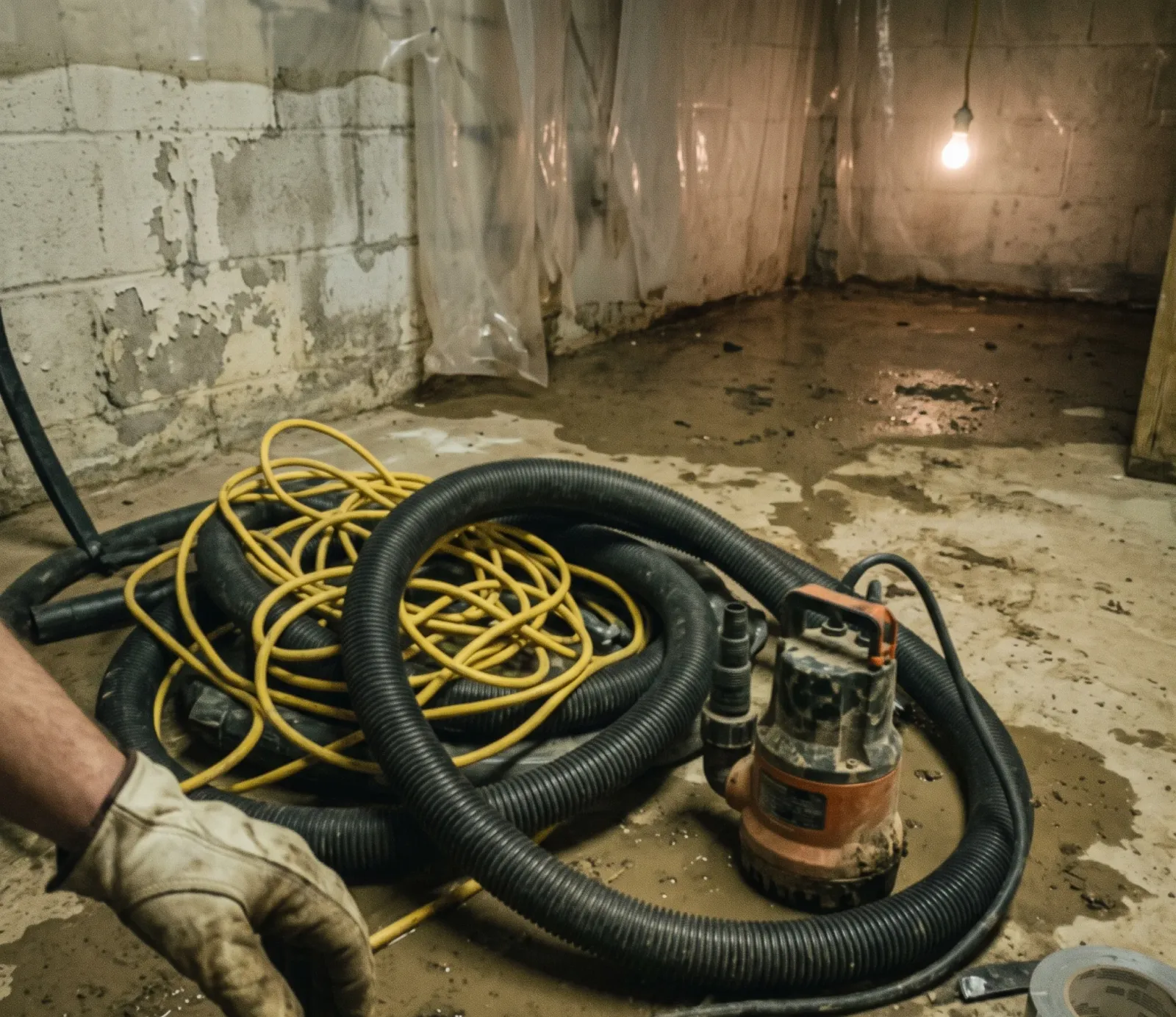
Concord Submersible Pumps for Deep Water
In Concord, seasonal pump checks move from safe access to depth, discharge, and operating limits around Rocky River and Coddle Creek.
Crews use a submersible pump for deep pooled water when the unit can sit underwater and sustained pumping suits the amount present. Access, debris, safe power, and a workable discharge route also shape the choice. As the level falls, the pump may leave shallow pockets behind.
Check Safe Access Before Pump Placement
Before a seasonal check turns into submersible pump water removal, safety comes first. A rising waterline can obscure the edge of the affected area. Once the area is safe to assess, a submersible pump is a powered device designed to sit underwater and move water through a hose. In Concord, the pros we connect you with can judge whether the water level and expected volume suit that method. The pump’s job is removal; it does not establish that the space is dry.
Depth and volume are related, but they are not interchangeable. A low layer spread across a wide ranch basement may contain more water than a deeper pocket in one corner. That estimate affects how long pumping may take and what capacity is practical. During a seasonal inspection, note the waterline in more than one spot and describe how far the affected area extends. Concord floodplain information can help a homeowner check conditions for a specific address; a city or ZIP name cannot settle that question.
Placement depends on what is under the water as well as how much water is present. A split-level basement may have steps, partitions, or stored items that limit a clear, stable place for the pump. The owner should point out floor drains, low corners, and anything hidden from view before equipment is positioned. At a Concord property, a clear account of the room layout helps the pros we connect you with decide where the unit can sit and how to monitor it.
Measure Depth as Water Accumulates
Before a pump is started, the discharge hose needs a route and a destination. The distance, turns, and path through a house can affect where the unit can be set and whether the hose stays clear of foot traffic. On a subdivision lot in Concord, the owner can identify property features and areas that should remain accessible while work proceeds. Ask the provider to explain the planned route and destination, then compare those details with the written scope.
Water carrying leaves, grit, or loose material can interfere with a pump intake. A crew may need to inspect what is in the water and select equipment suited to those conditions; a unit meant for clear water may not handle debris well. Seasonal checks can include a look at accessible drains and entry points, without stepping into unsafe water. Tell the pros we connect you with what is visible so they can assess the intake concern before choosing a pump.
As the waterline drops, the pump may no longer draw from the remaining layer. A basement floor that slopes or has shallow dips can leave small pools beyond the unit’s reach, so visible reduction does not mean every low spot has been cleared. During a Concord inspection, note where water collects as it recedes and ask what method, if any, is planned for what remains. A different removal tool may be appropriate once the level is too low for the pump.
Choose a Discharge Route in Advance
A seasonal water check should stop at the threshold if electrical safety is uncertain. Water entering again can change whether a pumping plan is practical. Do not wade in to place equipment or move belongings; wait for qualified guidance about the area. The pros we connect you with can assess whether work can proceed safely before setting a unit in a Concord home.
Pumping removes visible pooled water, but it cannot show what has soaked into flooring, trim, or wall materials. Some water can remain in corners or low spots after pumping. A homeowner should keep those steps distinct when reviewing the written work description: water removal is one task, and drying is a possible follow-up. That distinction matters in Concord whether the affected room is a utility area, finished basement, or ground-level living space.
Know When Pumping Must Stop
If the water level does not fall as pumping continues, incoming water may be replacing what the unit removes. A pump can move water already in the space, but it cannot correct the source. During a seasonal review in Concord, record whether water is still entering and share that observation with the provider; source repair may need separate attention. The same care applies around Bakers Creek Park: its name alone says nothing about conditions at a particular home nearby.
Before arranging submersible pump water removal, give the provider a useful site picture: water depth in the deepest area, the approximate spread, visible debris, room access, and possible hose routes. Those details help the pros we connect you with compare a proposed setup with the conditions at the property. Concord’s Village Park and Research Campus are familiar local reference points, but neither is a substitute for checking an individual address. Keep the written scope with any photos or notes from the inspection.
Seasonal Pump Planning Checklist
- Record water depth at the deepest point and note how far it spreads across the affected rooms.
- Ask the provider to explain the pump’s placement, safe power plan, and discharge route.
- Note visible leaves or grit, and ask what method is planned for water too shallow to pump.
- During a wet spell, measure the pool at its lowest point; the pump’s intake limit determines how much water it can remove.
- Estimate the area and depth of water together; a split-level lower floor may hold a different volume than one small room.
- Choose a discharge destination and clear hose path in advance, keeping the route away from entrances and regular foot traffic.
Extraction Questions
How deep must water be before a submersible pump can work?
Crews use a submersible pump when the water level can cover the unit and the amount to remove makes sustained pumping useful. The intake opening must stay clear for water to enter the unit. The site still matters: access, debris, a safe power arrangement, and a workable hose route can affect the choice. In Concord, compare the measured depth and likely volume with the provider’s proposed setup.
Can the pump keep going as water drops below its intake?
A pump can leave water behind when the remaining layer is too thin for its intake or when floor contours collect water away from the unit. Debris can also interfere with the intake. The provider can explain what the selected pump is expected to remove and whether another method is proposed for residual pools. Pumping alone does not confirm that damp building materials have dried.
What should I check before routing discharge near my Concord home?
The hose should lead to a destination the provider has assessed as workable for the property. Its route, length, and bends affect where the pump can be placed and how the line can be kept clear during operation. Ask the provider to identify the planned discharge point and describe any site limits that shaped the route. The estimate should make the assumed arrangement clear.
Compare the Proposed Pump Plan
Compare measured depth, estimated volume, and discharge options with the pros we connect you with before settling on a pump plan.
Call (704) 209-7411